TPO, EPDM, and Modified Bitumen: A Guide to Louisiana Commercial Roofs
A plain English look at the low-slope roofing systems used on apartments, condos, hotels, and restaurants across South Louisiana.
September 23, 2026 · 4 min read
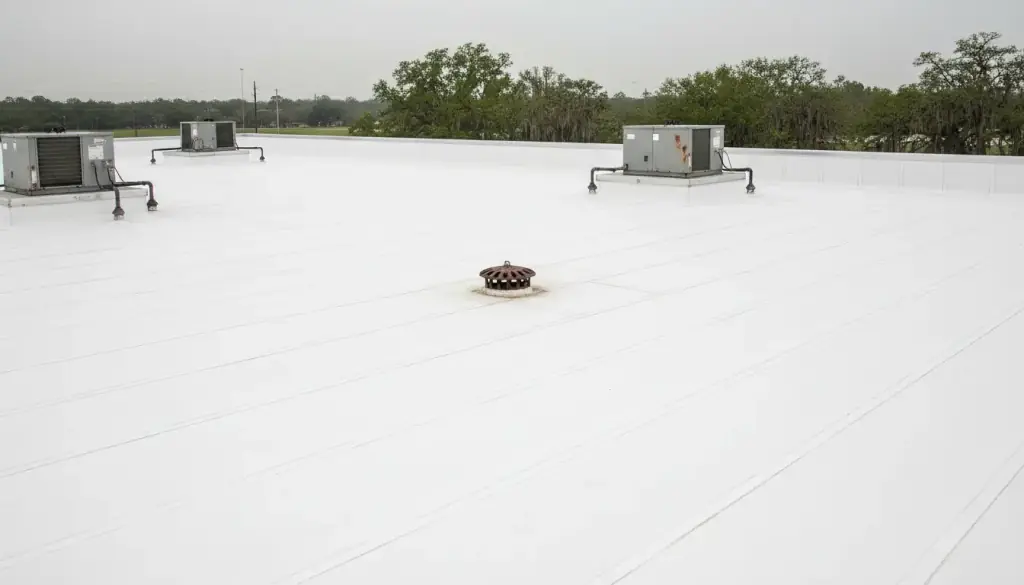
If you own or manage an apartment complex, condo building, hotel, or restaurant in South Louisiana, chances are your roof is flat or low-slope rather than the steep, shingled kind you'd see on a house. Low-slope commercial roofs use different systems entirely, and the terminology can be confusing if you don't work with roofs every day. Here's a plain English look at the most common options: TPO, EPDM, modified bitumen, and metal.
TPO: The Most Common Choice on New Low-Slope Roofs
TPO stands for thermoplastic polyolefin, and it's become one of the most widely used materials on new commercial roofs. It's installed as a single-ply membrane, usually in wide sheets with seams that are heat-welded together to form a continuous, watertight surface. Because the seams are welded rather than glued, they form a strong, continuous barrier across the whole roof surface. Most TPO membranes are white or light-colored, which reflects sunlight rather than absorbing it, a real advantage on a South Louisiana roof that bakes in the sun most of the year. It's a common choice for apartment buildings, motels, and restaurants because it covers large flat areas efficiently.
EPDM: The Rubber Roof That's Been Around for Decades
EPDM is a synthetic rubber membrane, and it's one of the older, more established low-slope systems still widely used today. It's flexible, which helps it handle the way a building naturally expands and contracts with temperature changes, and it has a long track record on flat and low-slope commercial buildings. EPDM is typically black, though white versions exist. Repairs on an EPDM roof are also generally straightforward, since patches and seams are simple to work with using compatible adhesives. Property owners who want a proven, straightforward single-ply system often land on EPDM for that reason.
Modified Bitumen: A Multi-Layer System for Extra Toughness
Modified bitumen is a different approach altogether. Rather than a single membrane, it's built up in layers, an asphalt-based material reinforced with fiberglass or polyester and modified with rubber or plastic compounds for added flexibility. Those layers can go down by torch application, hot asphalt, cold adhesive, or self-adhered sheets, depending on the project. The layered structure gives modified bitumen roofs a reputation for handling foot traffic and general wear well, which matters on buildings where mechanical units, vents, and other equipment sit on the roof. The multiple layers also add a bit of extra mass to the roof system, which some property owners like for buildings that see regular rooftop foot traffic from maintenance crews.
Metal Roofing on Commercial Buildings
Metal isn't only for houses. On commercial buildings, metal roofing sheds water quickly off a sloped or standing-seam surface and holds up well under sustained use, which is part of why it shows up on volume-built commercial projects, restaurants, and multi-family buildings across South Louisiana. On restaurants and hotels in particular, a metal roof's fast runoff can help keep water moving away from rooftop equipment during heavy South Louisiana downpours.
Matching the System to Your Building
The right system for a restaurant with a small flat roof and a few rooftop units isn't necessarily the right one for a large apartment complex or a multi-story hotel. Roof size, the number and type of rooftop penetrations, how much foot traffic the roof sees for maintenance, and the building's overall design all factor into which system makes the most sense. It's worth walking the roof with someone who installs all of these systems regularly, rather than guessing based on what a neighboring building has.
- Apartments and condos: large flat areas often favor TPO or EPDM for efficient coverage
- Hotels and motels: multiple rooftop units and equipment favor a durable, walkable surface like modified bitumen or TPO
- Restaurants: smaller flat roofs with exhaust and HVAC penetrations need careful detailing around every opening
- Volume-built commercial properties: metal roofing offers a durable, low-maintenance option at scale
Getting a Quote for Your Property
Geaux Roof installs TPO, EPDM, metal roofs, and modified bitumen on commercial properties across South Louisiana, including apartments, condos, motels, hotels, and restaurants. Geaux Roof's licensed and insured team provides commercial quotes within 24 hours of being contacted, so property owners and managers aren't left waiting to plan their next step.
Geaux Roof has been working on roofs across South Louisiana since 2005 and is a founding member of the Louisiana Roofing Contractors Association. Every technician is factory trained, with certifications renewed every year. From TPO and EPDM to modified bitumen and metal, the goal is a roof system suited to how the building is actually used, not a one-size-fits-all fix. If your property needs a new low-slope roof or you're not sure which system fits your building, call (225) 927-8300 for a free inspection and a quote within 24 hours for commercial properties.
Geaux Roof, (225) 927-8300
Call (225) 927-8300More articles
The First 48 Hours After Storm Damage to Your Roof in Baton Rouge
What to check, what to skip, and what to save in the first day or two after a storm damages your roof.
Shingles, Metal, or Peel and Stick: Choosing a Roof for Your Baton Rouge Home
A plain look at the roofing materials available for South Louisiana homes, and why the air moving through your attic matters just as much.